Teacher training

Explaining the technologies of the future with drones

Small drones form an interface between electrical engineering, mechatronics and computer science

Industrial trends such as electrification, sustainability and digitalisation can be presented and visualised very effectively with small drones that are suitable for educational use. The teacher training is designed as a cross-curricular introduction to the subject, which can then be developed further for individual subjects. Participants receive a comprehensive introduction to the use of small drones in the classroom.

The teacher training is tailored specifically to the curriculum of the school type concerned.

A certificate of participation is issued on request.

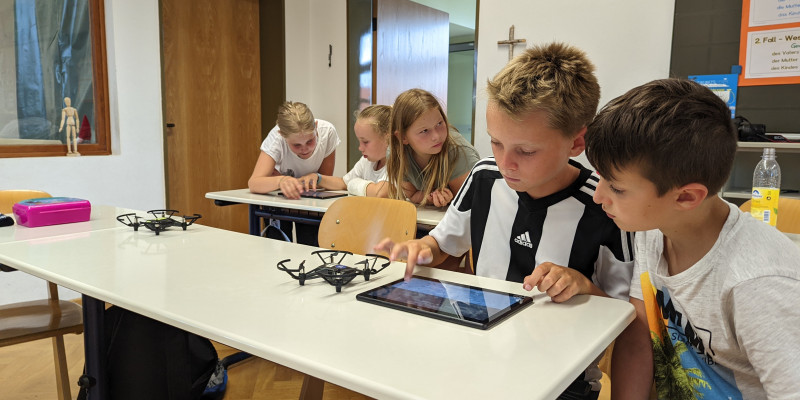
Five students program drones at the DroneMasters Academy

This training course is suitable for teachers at all types of school.

Teacher training

Veranstaltungssprache: Deutsch
Online-Seminar
15:00-16:30 Uhr

Online

DroneMasters Academy teacher training – primary school

Using small indoor drones as teaching material to convey subject content in primary schools

Drones form an interface between electrical engineering, mechatronics, robotics, aerodynamics and computer science. Industrial trends such as electrification, sustainability and digitalisation can be presented and visualised with suitable drones.
Exciting experiments can encourage interdisciplinary work and awaken and deepen an interest in scientific topics. The versatility of small drones and robots can also be used to foster an experimental and creative mindset. The points of connection and the ways in which drones are used additionally open up future perspectives for careers and for society.

The teacher training run by the DroneMasters Academy is deliberately designed as a cross-curricular introduction to the subject of “teaching and learning with drones” and can then be developed further for individual subjects. Participants receive a comprehensive introduction to the use of small drones in the classroom. This creates the basis for teaching that is close to real life and oriented towards technology.


The teacher training explores the following topics in depth:

• The framework for using small drones for educational purposes

• Current developments in drone technology, with reference to education

• Introduction to programming drones and robots – working with blocks and algorithms

This training course is suitable for all teachers at primary schools and concludes with a certificate of participation. The format is also suitable for staff working in school administration, technical administration and general supervision.


Background – drones as a teaching aid

Drones offer an entertaining and engaging way of introducing pupils to STEM subjects such as physics, mathematics and computer science and of awakening their enthusiasm for this field. Using drones in lessons makes it possible to gain practical experience in engineering, technology and programming. Flying and programming drones can help pupils to develop analytical thinking and problem-solving skills.

Drones can be used for teaching a wide range of subjects, including physics, geography, computer science, biology and environmental science. With the technological progress of recent years, drones have become safe, affordable and accessible, so that they can be integrated into lessons as a tangible and vivid tool.


The following knowledge and content can be explored in greater depth through the use of small drones:

Aviation and technology knowledge: By operating and programming drones, pupils can acquire a basic knowledge of areas such as aeronautical engineering, electronics and computer science.

Geography and environmental science: Drones can be used to gather and analyse data on landscapes, weather conditions and environmental conditions.

Art and photography: Drones can be used for creative projects such as photography and film.

Data analysis and statistics: Drones can be used to collect and analyse data, which can help pupils to improve their skills in data analysis and statistics.

All projects are set up as teamwork. Alongside the subject content, pupils therefore also learn soft skills such as problem-solving competence, conflict management and teamwork, which are playfully linked with robotics and small drones.

Designing, building, flying and programming drones enables pupils to improve their critical thinking and problem-solving skills.

DroneMasters Academy teacher training – upper secondary

Using small drones and robotics as teaching material to convey subject content, oriented towards the upper secondary curriculum.

With small indoor drones (class A0 / A1), pupils can learn the fundamentals of electrical engineering, robotics and programming, including how electric motors and battery systems work.

This content and these approaches can help to prepare pupils for the challenges and opportunities of the future and to give them forward-looking skills and competencies.

Examples of content and questions:

  • How can electric (air) transport be shaped in a more sustainable world?
  • Which projects can be made possible with airborne sensors and remote sensing? Which of them can be pursued in small working groups in the classroom
  • How can a flying robot be used autonomously?
  • What challenges does this involve?
  • What does the mobility of the future look like and which skills are needed for these future fields of work. (New-Collar Workers)


The upper secondary teacher training explores the following topics in depth:

  • The framework for using small drones (C0) for educational purposes
  • An insight into current developments in drone technology, with reference to education
  • Introduction to programming drones – from the block-based browser to the script-based interface with Python
  • Working with sensor data from drones: capture, analysis and evaluation
  • Artificial intelligence and machine learning in connection with drones

This training course is suitable for teachers at upper secondary level and concludes with a certificate of participation.


Background – drones as a teaching aid

Drones offer an entertaining and engaging way of introducing pupils to STEM subjects such as physics, mathematics and computer science and of awakening their enthusiasm for this field. Using drones in lessons makes it possible to gain practical experience in engineering, technology and programming. Flying and programming drones can help pupils to develop analytical thinking and problem-solving skills.

Drones can be used for teaching a wide range of subjects, including physics, geography, computer science, biology and environmental science. With the technological progress of recent years, drones have become safe, affordable and accessible, so that they can be integrated into lessons as a tangible and vivid tool.


The following knowledge and content can be explored in greater depth through the use of small drones:

Aviation and technology knowledge: By operating and programming drones, pupils can acquire a basic knowledge of areas such as aeronautical engineering, electronics and computer science.

Geography and environmental science: Drones can be used to gather and analyse data on landscapes, weather conditions and environmental conditions.

Art and photography: Drones can be used for creative projects such as photography and film.

Data analysis and statistics: Drones can be used to collect and analyse data, which can help pupils to improve their skills in data analysis and statistics.

All projects are set up as teamwork. Alongside the subject content, pupils therefore also learn soft skills such as problem-solving competence, conflict management and teamwork, which are playfully linked with robotics and small drones.

Designing, building, flying and programming drones enables pupils to improve their critical thinking and problem-solving skills.


The minimum number of participants is six. The course can be held in Berlin or at schools and institutions throughout Germany.

On successful completion, participants receive a certificate as confirmation of their participation.

Further information on costs and possible dates is available on direct request.

Privacy policy (copy)*